The Guano Harvest: Farming the Top of Plaskett Rock
Ed Plaskett and his brothers built a way to the top of Plaskett Rock — where centuries of seagulls had left a crown of first-rate fertilizer, free for the scraping.
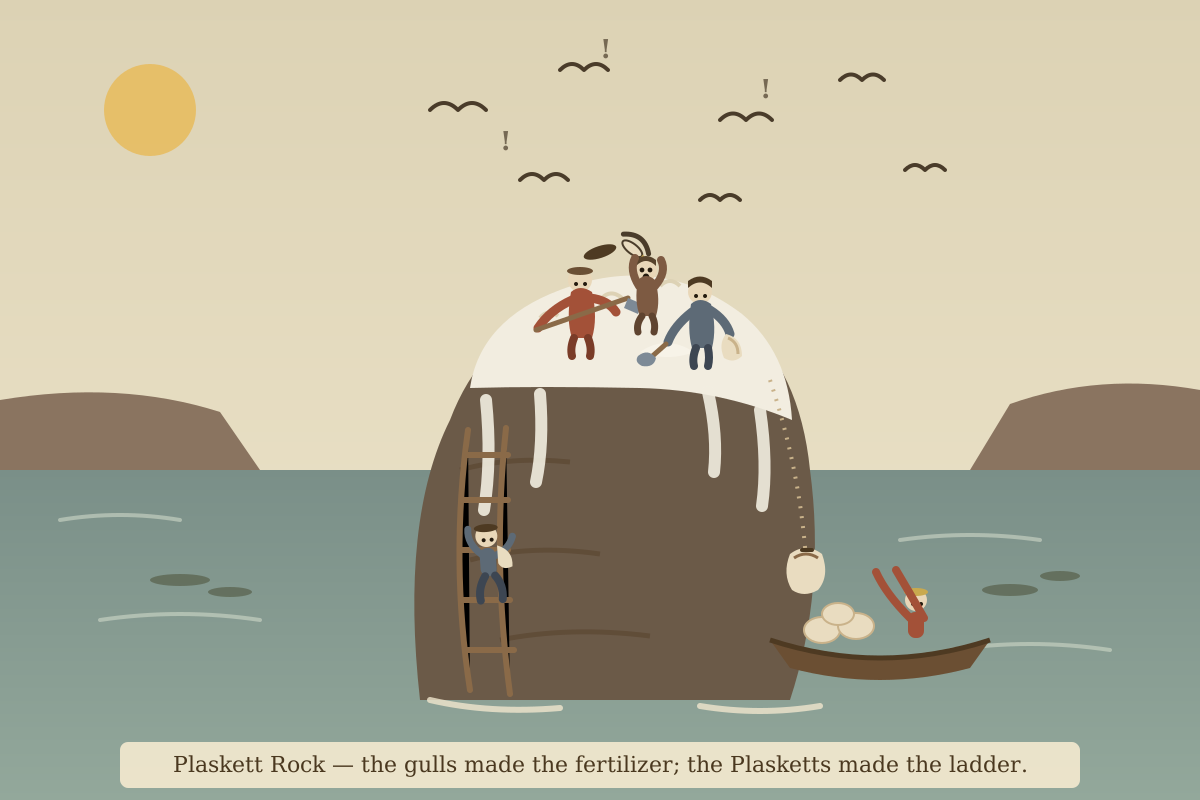

Every farm needs fertilizer, and the Plasketts’ most unusual supply stood a few hundred yards offshore.
As Edward Abbott Plaskett told it to his grandson Bill, he and his brothers and family built a way to get up on top of Plaskett Rock — the great sea stack off Sand Dollar Beach that carries the family name. The top of the rock belonged to the seagulls, and the gulls had been improving it for centuries: the crown was literally white with guano, so thick the family could scrape it off by the load.
And scrape it they did. Down the rock, across the water, and onto the gardens and fields of Pacific Valley went the harvest — first-rate fertilizer, free for the climbing, courtesy of ten thousand generations of seabirds. Guano was serious agricultural business in the nineteenth century; nations fought over island deposits of it. The Plasketts simply looked out their front door.
Look at any photograph of Plaskett Rock today and you can still read the story: the crown still shines white in the sun, the gulls and cormorants still hold the summit — the deposit has been rebuilding, uninterrupted, since the last Plaskett climbed down.
Recorded from the memory of Bill “Bull Plaskett” Alderson, as his grandfather Ed Plaskett told it to him. See Plaskett Rock: The Family Name, Written in Stone.

