Boat Day - The Holiday That Surpassed Christmas
Not Christmas but Boat Day was the great holiday — the day the ship came in with everything the coast couldn't make.
On the isolated Big Sur coast, the Plasketts were cut off from civilization — the nearest town days away over brutal mountain trails.
So two of the Plaskett boys rowed out through the surf and hailed a passing ocean liner. They were allowed aboard, and made arrangements for the ship to stop on its next run with supplies. From then on every family made its yearly list — bolts of cloth, hardware, tools, medicine, hundreds of pounds of green coffee they browned themselves — and the schooner Confianza made regular runs from San Francisco.
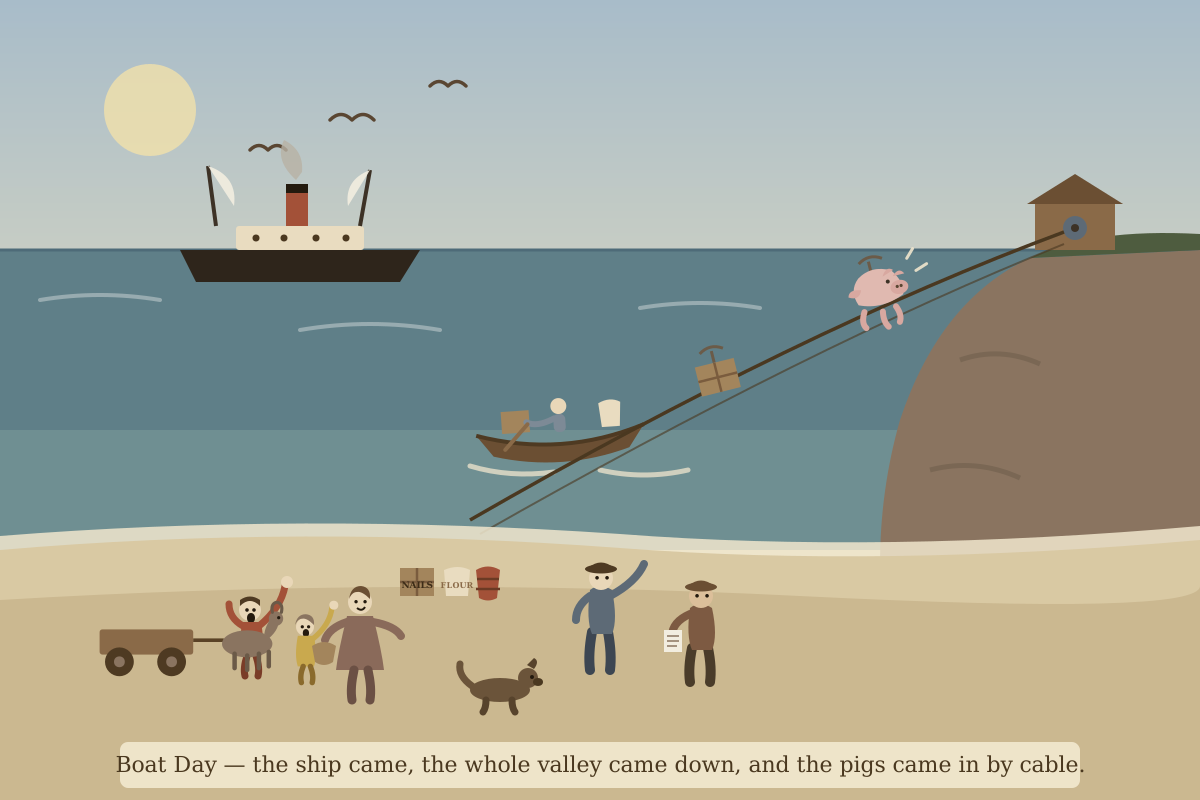
When the ship appeared on the horizon, everything stopped. Boat Day surpassed all holidays — even Christmas. The whole community gathered at the landing, where a wire chute lowered cargo — and even livestock — from the cliffs to the shore. Children watched wide-eyed as pigs swung through the air on cables.
It was the day the outside world reached Pacific Valley — and the valley counted the months to the next one.
The film: Boat Day brought back
Boat Day — the Film. Restored, colorized and composited by Bill “Bull Plaskett” Alderson from the family’s original photographs and his own footage of the landing water. Watch it full size in Films →
A century after the last schooner called, Boat Day moves again. The family’s photographs of the landing — faded, cracked, silver-black — were restored and colorized; then Bill went out on the rocks at Plaskett Rock, right where it happened, and filmed the same water. The schooner, the surf boat, and the hog riding the landing cable were composited into the living sea, and the crowd on the bluff came back in color.
Everyone in that crowd is family or neighbor. The women in their good hats by the wire-chute derrick, the man on horseback by the corral fence, the children in Sunday clothes on the sacked freight — these are the Plasketts and their coast on the biggest day of the season. Mabel, her sisters, and the man who would be Bill’s grandfather were in exactly this crowd on exactly this bluff.
The original photograph
The centerpiece of the restoration is a photograph that has been in the family for over a hundred years: the supply schooner standing off the rocks in the fog, the surf boat alongside, and — caught mid-crossing on the wire between ship and bluff — a hog riding the cable trolley over the open sea. Whether that hog was leaving for market or arriving for the family’s own pens, the record doesn’t say; either way, it traveled better than most people did on this coast.
What the film really shows
Writers have called the South Coast “lost and lonely.” The family has always known better: it was neither — it was exactly what William Lucas Plaskett wanted. He had tried Mendocino first, another rough coast, before he brought his family here in 1869. Hard to reach and hard to live on meant nobody came who didn’t mean to stay; the isolation wasn’t the price of the dream, it was the dream. And once or twice a season the whole scattered coast condensed onto one bluff for a single working holiday — the ship standing off, the cable singing, every neighbor within a day’s ride watching the freight swing in.
That is what this film holds: not loneliness. A landing, a larder, and a community — at the one spot on a fenceless coast where everyone gathered.

